How to create high quality blue and green infrastructure on constrained sites

The success of a new community - for residents, wildlife and the wider environment – rests on the quality of its blue and green infrastructure: the network of planting, biodiversity and sustainable drainage.
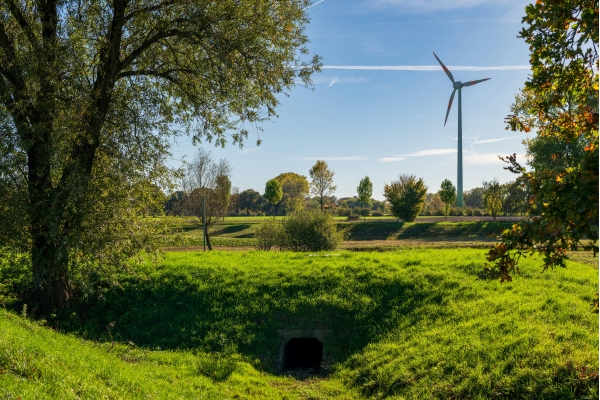
With more than 300 local authorities having declared a climate emergency, planning policy at both national and local levels now requires new development to respond more directly to climate change, green infrastructure needs, water scarcity and flood risk. Biodiversity net gain has added further demands, making habitat value a measurable part of the planning process.
On constrained sites, this can be harder to achieve. Yet it is often on these sites that thoughtful blue and green infrastructure has the greatest value, making the limited space more supportive of people and nature.
The first move is spatial
In some situations landscape can easily be treated as what remains after homes, roads, parking and utilities have been accommodated. But retrofitting meaningful natural infrastructure invariably leads to compromise.
To ensure quality and the spirit of a site, it is necessary to let the landscape structure of the site lead the process, for masterplanners, engineers, ecologists and landscape architects to work together from the earliest possible stage to design a vision including and around these assets. This process will enable existing ditches, watercourses, mature trees, hedgerows, habitat corridors and overland flow routes to be understood before the layout is confirmed. Most importantly the developer/client needs to engage and buy into this process to create a resilient scheme.
Density can release land
Higher density does not automatically mean poorer amenity, just as lower density does not create better places: the issue is how land is used. On suburban sites, a move away from detached and semi-detached homes towards well-designed three-storey townhouses can allow housing to be delivered on a smaller footprint. By using space vertically, more land can be released for natural infrastructure. Our Ascot Gardens scheme for Cala Homes currently under construction is testament to how higher density in a town centre site can deliver exemplar landscape and biodiversity network amplified by Cala’s own Urban Wildlife Strategy.
Boyer also shaped the masterplan of Spring Hill Village in Maidenhead for Berkeley Homes. Here this principle is visible in the way landscape has been treated as integral to the community – in the green open spaces, village green, sustainable transport links and natural play. It shows how finite land can provide shared landscapes that support both people and the environment.
Making water visible
The Environment Agency’s latest national assessment shows around 6.3 million properties in England are in areas at risk of flooding from rivers, the sea or surface water, making flood risk a central issue in masterplanning.
For housing schemes, this means blue infrastructure should not be hidden underground unless there is no realistic alternative. Rain gardens, swales, ponds, wetlands, permeable paving and engineered tree pits can all help slow, store and clean water. They can also make streets and open spaces more attractive.
Even on the street, kerb inlets can direct water into rain gardens, parking bays can use permeable paving, street trees can receive runoff and narrowing points can be formed with trees and planting rather than hard build-outs.
Biodiversity and accessibility
Biodiversity net gain has added another dynamic to the provision of green infrastructure in major developments, requiring a vision to consider for nature first.
Whilst safeguarding areas for biodiversity can create non -accessible green space (for humans, cats and dogs), this does not mean any reduction in residents’ benefit from and access to nature. In fact quite the opposite. Protected habitats can contribute through birdsong, pollinators, seasonal planting and visible wildlife and even in previously brownfield sites or in a town centre location create a green island acting as a haven for biodiversity. The key is to design a hierarchy of space: for socialising, active travel and habitat protection.
Planting needs to be resilient
A scheme can look green on completion and fail as climate infrastructure for various reasons: ornamental planting that cannot cope with wetter winters, hotter summers or periodic inundation is not resilience; SuDS planting must be zoned, with wet-tolerant species in basins and rain gardens, damp-tolerant species on margins and more drought-resilient meadow, shrubs and trees on upper banks.
Decent trees need to be planted and particular care taken to ensure their longevity. They are often the single most powerful intervention for shade, cooling, biodiversity and identity but they need space - below ground as well as above it. Not planting trees to save space in the development and make a profit is short term thinking. Similarly, a young tree planted in the wrong place, with insufficient rooting volume, will not become the mature canopy that future residents need.
The value is in the long term
The true measure of success is stewardship. Green infrastructure has to survive occupation and changing weather and last for generations. High quality green infrastructure in developments gives a sense of pride to residents. It’s what makes a development desirable and resilient. Planting trees, creating space for biodiversity and thinking about what we as property professionals leave behind for our children is the least we can do to create responsible, safer and a greener future for our next generation.