When The Market Moves Faster Than the System, Delivery Stalls

Housing delivery is often discussed as if it follows a straightforward sequence. Allocate land. Secure planning permission. Agree obligations. Start on site. Build homes. Sell homes. Move on.
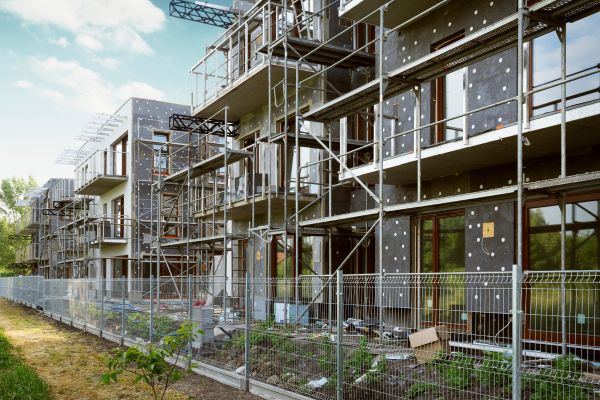
Housing delivery is often discussed as if it follows a straightforward sequence. Allocate land. Secure planning permission. Agree obligations. Start on site. Build homes. Sell homes. Move on. In theory, it sounds simple. In practice, anyone involved in planning, land or development knows that delivery is far more complex than that.
Housing delivery depends on alignment. Planning policy needs to align with market conditions. Land values need to align with policy expectations. Viability needs to align with infrastructure and affordable housing requirements. Demand needs to align with sales values. Regulation needs to align with what the market can realistically absorb.
When those factors move together, delivery becomes possible.
When they move apart, delivery stalls.
The System Works Better On The Rise
When land values are rising, the system has more room to manoeuvre. Higher values can absorb more policy requirements and make viability easier to demonstrate. Landowners may have greater confidence. Developers may be more willing to take risk. Affordable housing, infrastructure contributions and wider obligations can often be negotiated against a stronger market backdrop. That does not make delivery easy, but it does give the system more flexibility.
The challenge comes when the market changes. Values can fall quickly. Sales can slow. Costs can rise. The economics of development can shift in a relatively short period of time, but policy expectations often move much more slowly.
Affordable housing requirements remain.
Infrastructure obligations remain.
Regulatory costs remain.
Design expectations remain.
Environmental requirements remain.
The market may have changed.
But the system has not.
That is when delivery starts to lock.
Falling Values Change Everything
Land value is not an abstract concept. It is the point where policy ambition and delivery reality meet. If values are strong, more can be asked of a site. If values weaken, the same expectations can become much harder to support.
That does not mean policy objectives should be abandoned whenever market conditions become more difficult. Far from it. But it does mean the system needs to understand the consequences of inflexibility. If expectations remain fixed while the market weakens, something has to give.
Sometimes that means delayed starts.
Sometimes it means renegotiated obligations.
Sometimes it means fewer affordable homes.
Sometimes it means sites becoming unviable.
Sometimes it means land simply does not come forward.
None of those outcomes helps housing delivery.
Policy Ambition Needs Delivery Flexibility
The housing crisis demands ambition. The country needs more homes, more affordable homes, better infrastructure, stronger environmental performance and higher-quality places. Those objectives matter. But ambition without flexibility can become self-defeating.
If every policy requirement is treated as fixed regardless of changing market conditions, the system risks preventing the very development it is trying to secure. That becomes particularly challenging in a market already dealing with cost inflation, higher interest rates, infrastructure constraints, increasing regulation and weaker buyer confidence.
The question is not whether policy objectives matter.
They do.
The question is whether the system is flexible enough to deliver them through changing market conditions.
Because a policy requirement that prevents a scheme from coming forward does not deliver a better outcome.
It delivers no outcome.
More Permissions Could Create A New Bottleneck
Planning reform is beginning to shift the conversation. There is more focus on housing targets, local plans, speeding up decision-making and unlocking land. All of that is positive. More sites moving through the planning system should, in theory, support greater delivery.
But if permissions increase at the same time as demand weakens, viability tightens and delivery costs continue to rise, the sector could find itself facing a different problem. Not a shortage of planning permissions.
A shortage of deliverable permissions.
That distinction matters.
A permission only has value if it can be implemented. If landowners, developers, funders, registered providers and buyers cannot make the economics work, then the system risks creating the appearance of progress without the reality of delivery.
That is paper progress.
And paper progress will not solve the housing crisis.
The Market Cannot Be Ignored
The planning system can create the conditions for delivery, but it cannot ignore the market in which delivery takes place. Housing delivery does not happen in isolation. It is influenced by buyer demand, sales rates, mortgage affordability, build costs, finance costs, investor confidence, registered provider capacity and land values. All of those factors affect whether a planning permission ultimately becomes a completed development.
When those factors weaken, the route from planning permission to completed homes becomes more difficult.
This is not an argument for allowing the market to dictate everything.
It is an argument for recognising that housing delivery is not created by policy alone.
It is created when policy and market reality are capable of working together.
The System Needs To Bend
A system that cannot respond to market change will struggle to deliver through a full economic cycle. It may work when values are rising. It may work when confidence is high. It may work when costs are manageable and demand is strong. But the real test is whether it can continue to support delivery when conditions become more challenging.
That requires proportionality. It requires honest viability conversations and realistic phasing. It requires coordination between planning, infrastructure, funding and delivery partners. Above all, it requires a willingness to ask whether requirements are being applied in a way that supports delivery or unintentionally prevents it.
Because when expectations do not adjust as quickly as the market, the system does not bend.
It locks.
And when the system locks, homes do not get built.