Planning Headaches for Self-Storage? Here's How to Declutter the Process

Whilst giga and data centres are considered the darlings of the industrial sector, let’s not forget the importance of the unsung B8 hero, the humble, but much needed, self-storage facility.
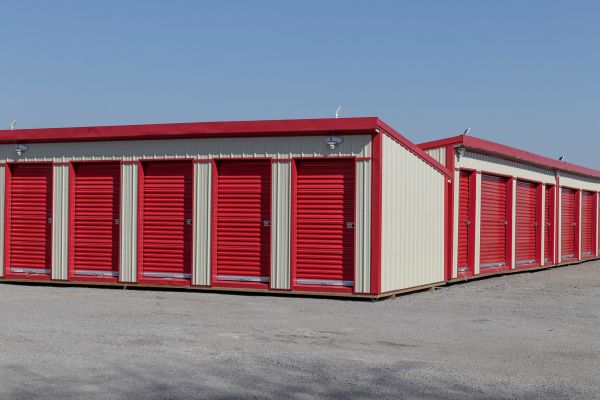
Indeed, figures from the Self-Storage Association (SSA) UK estimates that there are now over 2,900 self-storage sites in the UK and, in 2024, it is estimated that the total turnover of the industry was £1.2 billion, indicating that this is a growing sector. This is reflected within paragraph 87 of the NPPF which requires decisions to recognise and address the specific locational requirements of different sectors and making provisions for, amongst other things, storage and distribution operations at a variety of scale and in suitably accessible locations.
Indeed, over the last 18 months, we have had more and more clients ask us about the prospects and challenges associated with achieving planning permission for a self-storage facility on their site and what issues we might need to overcome. With this in mind and against the backdrop of Boyer’s recent success in Scunthorpe where we secured (via appeal) the change of use of a bingo hall to self-storage, here are our key takeaways.
Given the shift in both working and living arrangements, the need for self-storage facilities is increasing and isn’t likely to go away anytime soon, particularly given the housing cris and the ever-increasing need for space to meet our modern way of living.
Let’s start with some myth busting. Self-storage facilities are an industrial B8 use class and so the principal of self-storage in industrial locations should already be considered as acceptable. There is a common misconception that self-storage facilities do not create many employment opportunities and, whilst that may be true in terms of on-site jobs, it is important to look at the wider economic landscape.
There has been a noticeable rise in e-commerce and home-based start-ups, both of which require storage space which, in the majority of cases, the owner’s residential accommodation cannot provide. Therefore, local independent businesses need storage space which is easily accessible so the owners do not have to travel miles away, meaning they can run their business efficiently. These e-commerce and start-up businesses will deliver economic benefits to the area, delivering new employment opportunities and is therefore a very significant and material benefit that can be delivered by self-storage facilities. Self-storage facilities should be considered an employment generating opportunity in the same guise as more traditional employment generating uses. Though, it is important to note that self-storage facilities fall firmly within Class B8 and cannot be used for any other use, such as offices (Class E). In saying this, there are cases where certain operators will include break out spaces to allow small businesses to do task such as invoicing, though any application including similar spaces will need to make it clear that these spaces are very much ancillary to the self-storage, B8 use.
Self-storage facilities offer affordable storage space to those who otherwise may struggle to find elsewhere to store items or who do not have the funds (or space) to build an extension.
The economic benefits of self-storage facilities cannot be underestimated! The role that high-quality, well-located self-storage facilities play in facilitating significant employment growth within the wider economy is substantial.
Such facilities support existing and emerging local businesses by, amongst other things, providing flexible opportunities for businesses to expand without the significant overheads associated with traditional employment space, or the need to relocate to find additional space. In particular, smaller and start-up companies benefit from this flexibility.
The Self-Storage Annual Report (2023), prepared by the SSA acknowledges the support that self-storage facilities provide local businesses who could not operate without suitable self-storage. Self-storage facilities should therefore be considered as local business incubators. This is supported by evidence that 20% of all businesses that use self-storage operate entirely from self-storage. One of the most challenging stages for small businesses is the initial growth stage from a home-based business. Self-storage can provide a flexible and cost-effective solution to accommodate this growth and assist with the transition from home-based business to larger-scale operators employing more staff. Based on typical occupancy rates for self-storage facilities being between 85% and 90%, these local economic benefits of self-storage facilities can be substantial!
As discussed, whilst there is the traditional view that self-storage facilities are located in out-of-town industrial estates, more and more of these facilities are now locating in more urban areas. Primarily this is due to the fact that the target user is, as above, most likely to be an independent e-commerce or start-up business or a residential user who needs more storage space, both of which require their property to be in an easily accessible (and affordable) location. In saying that, when it comes to submitting a planning application, robust and clear justification is needed as to why, what is a Class B8 use, should be located in a more commercial location. To put it simply, the reason is because the intended occupiers will primarily be local residents who need an easily accessible location. At Boyer, we have worked on a number of examples which have been located within, or close to, town centres and are easily accessible not only by private car but also by public transport. We have been able to successfully demonstrate to the Council that these proposed locations are suitable for self-storage facilities and, in fact are in a much more accessible location for the intended occupiers.
The next issue to tackle when it comes to securing permission for a self-storage facility is design, especially within more commercial or residential locations. We have worked on examples where the design has been required to take inspiration from both industrial and adjacent residential uses so it is an element which will need careful consideration.
Whilst design is subjective and is dependent on the surrounding character of the area, our experiences suggests that Councils do like to see industrial elements incorporated into the design to reflect the end use of the building. Design is something to be discussed in more detail at pre-app stage, but we would strongly recommend that clear and concise design rationale is provided to the Council.
As is the case with the majority of planning applications, consideration will also need to be given to amenity and sustainability. As we all know, sustainability is becoming an ever-bigger issue in planning and everyday life. Self-storage facilities do give an opportunity to increase the sustainability credentials of a site by incorporating features such as green roofs and on-site renewable energy initiatives such as PV panels.
Self-storage facilities are a growing industry sector and one that offers a lot of potential if you are looking at ways to optimise an underused site, not just in an industrial location. Whilst we have briefly touched upon the benefits (and challenges!) in this article, self-storage facilities do take a lot of navigating around the planning system and close engagement with the council is key, especially given that the concept of having such facilities in more accessible locations is still somewhat new to a lot of councils.